


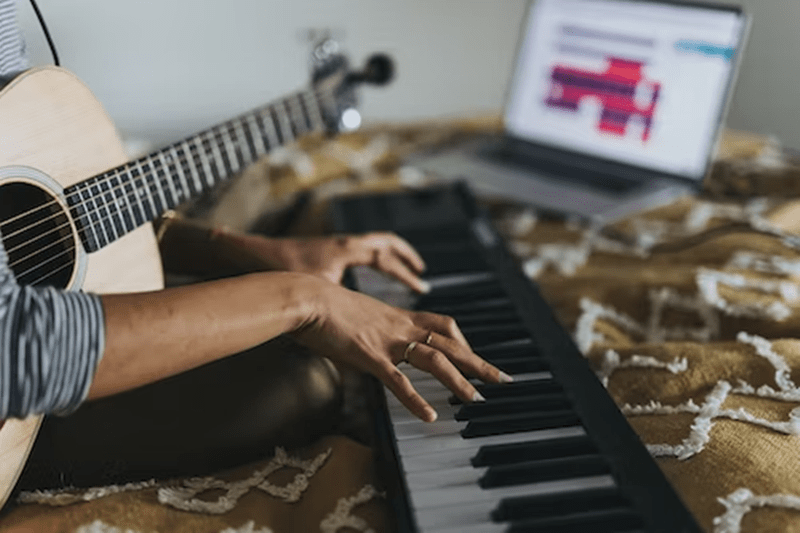
Maintaining a practice routine contributes greatly to your mastery and success when playing different musical instruments. You need to take time out to consistently work on your skills to help you improve and deliver the best each time.
So, finding a holistic practice routine that works for you will make it easier and more enjoyable for you. But, your practice routine may differ greatly from the next person, making it essential that you find a routine that fits you.
Although practice routines may differ, the fundamental aspects will remain constant. These fundamentals ensure that you hone your skills the right way and equally improve in different areas. Here’s a breakdown of what to consider when crafting a holistic practice routine.
Learning Environment
The first step is to ensure that your environment is optimized for your practice sessions. Doing this allows you to create a holistic learning environment that will boost your performance and improve your concentration.
You can optimize your environment by turning off all distractions and preparing your instruments for the day beforehand. When you do this, you set yourself up for success to ensure that you stay focused on hitting your practice targets.
Having a goal for each practice session is also something that will foster a great learning environment. If you’re struggling to play specific notes on your piano, you can set out to practice and perfect them during your next practice.
Knowledge
Refining your musical knowledge is important to ensure that you are well-rounded and can understand different concepts. Including knowledge in your practice routine will require you to pay attention to the theory and application bit.
If you’re playing an instrument, you want to be able to read your sheet music and understand the keys, pitches, rhythms, and chords. Doing this turns you into someone who can not only play an instrument well but also can read music and deliver it accurately.
In addition, if you’re learning how to play a new instrument like a drum, investing in your knowledge is essential. Drum lessons by Music to Your Home will come in handy to cover this part of your practice routine.
Ear Training
Most people neglect ear training and prefer to work with sheet music when playing an instrument. However, ear training can be a great addition to your skills as a musician and would set you apart from others.
Ear training involves practicing how to identify pitches, melodies, rhythms, and more by just hearing. Here, you’ll not be using any sheet music. So, you can start by listening to a part of a song and try to play it on your instrument.
Adding this to your practice routine helps you think outside the box and challenges you to put your knowledge into actual practice. In addition, it gives you the experience of easily playing music after listening to it a few times.
Technique
Musical technique is the part that most people spend a lot of time on. We all want to have optimal control over our musical instruments when playing different songs. This is a great aspect to include in your practice routine.
Taking your time to improve your technique allows you to add musical effects and experiment more with your music. It is one of the fun things to be doing during your practice session which is why most people dwell more on this.
However, as fun as practicing and perfecting your technique is, don’t make it your sole focus that you forget other aspects. Remember your goal is to develop a holistic practice routine.
Repertoire
What are some of the music pieces in your collection that you’ll use in your practice session? Having this in check will help you ensure that you optimize your practice routine and gain the most from it.
One thing to note is that your music repertoire can greatly influence the other fundamental aspects of any good musical practice. If you choose to practice with a song you are interested in but have poor technique, then you’ll focus more on the technical skill.
However, if you choose a song you haven’t played before and have no sheet music for it, then you can work on ear training. Keep your musical selection versatile to allow you to practice and improve in different aspects.
Improvisation
Improvisation allows you to bring in your creativity and experiment with different sounds on the spot without initially preparing for them. Doing this during your practice session is a great way to get comfortable with doing things outside the norm.
In addition, it allows you to gain the confidence to do it when performing before other people. It also acts as a great way for you to discover the kind of sound that comes naturally to you and improve that.
Time
Executing at the perfect time feel gets people more involved in your music and offers a natural flow. Practicing your beats per minute to ensure that you learn how to flow with the music is essential.
Doing this will allow you to play any type of music and make fire beats that people will sing along to and move to. There are different techniques you can practice here to help you uplevel your time and deliver feel-good music.